The Making of an Enduring Legend
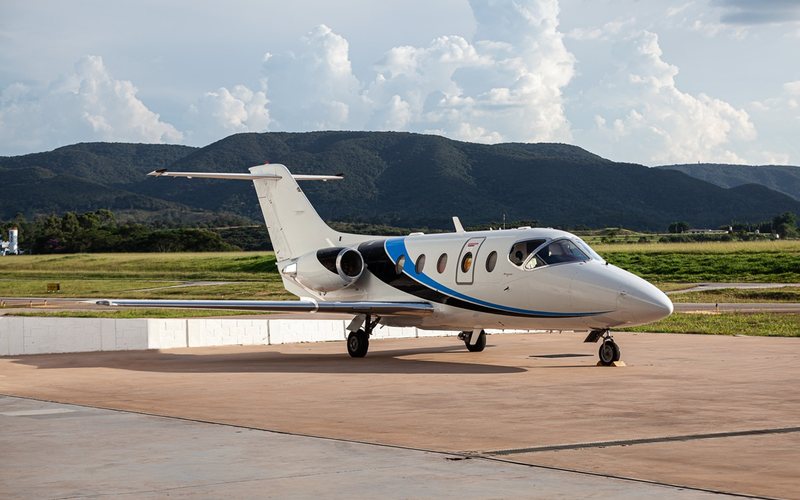
In the competitive landscape of business aviation, few aircraft can claim a history as rich, varied, and enduring as the Hawker 400. It is an aircraft that has worn the emblems of three different manufacturers, served with distinction in the world’s most demanding air forces, and, in an era of disposable technology, has been reborn through sophisticated 21st-century remanufacturing. This remarkable longevity is no accident; it is a testament to a design that was fundamentally right from its very inception. The story of the Hawker 400 is not merely a chronicle of corporate handovers but a compelling narrative of continuous evolution and inherent excellence. Its journey from the ambitious Mitsubishi MU-300 Diamond of the 1970s to the modernized Nextant 400XTi and Hawker 400XPR of today is defined by a uniquely robust airframe, a class-leading cabin, and an adaptability that has allowed it to transcend its era. This is the story of how a Japanese challenger became an American icon and, ultimately, a timeless legend in the light jet category.
The Diamond’s Genesis – A Japanese Challenger
Mitsubishi’s Post-War Ambition
The origins of the Hawker 400 lie in the post-war industrial renaissance of Japan, specifically with Mitsubishi Heavy Industries (MHI). Building on a formidable aviation legacy and the commercial success of its MU-2 twin-turboprop, MHI set its sights on the burgeoning business jet market in the late 1960s. In 1969, the company initiated an extensive market research program, and by the mid-1970s, this effort crystallized into the development of the MU-300 Diamond. The objective was clear and ambitious: to create a “top-of-the-line” corporate aircraft that could compete directly with the dominant American players of the day, namely the Cessna Citation and the Learjet 25.
A Contrarian Design Philosophy
From the outset, Mitsubishi’s engineers made design choices that deliberately set the MU-300 apart from its competition. While Cessna was utilizing a straight-wing design for its Citation line, Mitsubishi opted for a more advanced, computer-designed swept wing with a 20-degree quarter-chord sweepback. This aerodynamic choice was aimed squarely at performance, allowing the Diamond to achieve a high-speed cruise approximately 50 knots faster than the comparable Citation II, albeit with a nominal fuel penalty.
Equally important was the focus on passenger experience. The Diamond was designed around a large, circular-section fuselage that provided a remarkably spacious cabin for its class. Its most celebrated feature was a “trenchless” flat floor, an innovation that eliminated the dropped aisle common in other light jets and created a more open, comfortable environment that passengers “raved about”. The cabin was typically configured for seven to eight passengers, with a four-place club arrangement and a full-width aft lavatory. The aircraft’s construction was conventional, utilizing primarily aluminum and light aerospace alloys, and featured a distinctive T-tail, overwing spoilers for roll control, and powerful flaps for solid field performance.
The Certification Crucible
The MU-300 Diamond prototype made its first flight on August 29, 1978, marking a significant milestone for MHI. However, the path to certification proved to be unexpectedly arduous. Mitsubishi chose to certify the aircraft in the United States under the Federal Aviation Administration’s (FAA) rigorous Part 25 regulations for transport-category aircraft. The timing was unfortunate. In May 1979, the crash of an American Airlines DC-10 in Chicago prompted the FAA to introduce new, far more stringent requirements.
Meeting these new regulations forced Mitsubishi into a lengthy and difficult redesign process. The necessary structural and system changes added between 500 and 600 pounds to the aircraft’s empty weight. This significant weight gain had an immediate negative consequence, hampering the jet’s performance in hot-and-high conditions and delaying its entry into service. The FAA finally granted type certification on November 6, 1981, years after the initial flight and nearly a decade after Cessna had established a commanding lead in the market.
This difficult certification, however, had a profound and unforeseen long-term benefit. The process of strengthening the aircraft to meet the new, tougher standards inadvertently created its single greatest asset: an exceptionally robust, “overbuilt” airframe. This unintended consequence of a regulatory hurdle would become the bedrock of the aircraft’s legendary durability and the very reason it was later deemed a perfect candidate for 21st-century remanufacturing. The crucible of certification forged a diamond that was not only elegant but also incredibly tough.
Early Evolution: Diamond I, IA, and II
Following certification, all production aircraft were assembled from Japanese-built kits at Mitsubishi’s facility in San Angelo, Texas, which it had acquired from the Mooney Aircraft company in 1969.
- Diamond I: The initial production model was powered by a pair of Pratt & Whitney Canada JT15D-4 turbofan engines, each producing 2,500 pounds of thrust. A total of 61 production Diamond I aircraft were completed.
- Diamond IA: Announced in 1984, the Diamond IA was a direct response to the performance limitations of the original model. It featured upgraded JT15D-4D engines, which were flat-rated to maintain full takeoff thrust at higher ambient temperatures, vastly improving hot-and-high performance. The maximum takeoff weight (MTOW) was increased, and an additional cabin window was added on the port side, making it visually distinct. A total of 27 Diamond IA models were built.
- Diamond II: The final evolution under the Mitsubishi brand was the Diamond II, announced in October 1984. This version represented a significant power upgrade, incorporating the much more capable JT15D-5 engines, each rated at 2,900 pounds of thrust. This model also introduced thrust reversers. However, production of the Diamond II was short-lived. Only a small number, estimated between one and eleven, were built before a major change in the program’s ownership was set in motion.
An American Icon Reborn – The Beechjet Era
The Strategic Acquisition (1985)
By the mid-1980s, the Mitsubishi MU-300 Diamond program was at a crossroads. Despite its excellent design, sales had begun to dwindle. Simultaneously, the venerable American manufacturer Beechcraft found itself in urgent need of a competitive entry into the light business jet market. Beechcraft’s leadership saw the immense underlying potential in the MU-300, recognizing that its fundamentally sound airframe and spacious cabin were the “good bones” upon which a market leader could be built. They believed that with the right upgrades and the power of the Beechcraft brand, the aircraft could be a resounding success. In 1985, after extensive negotiations, Beechcraft acquired the production rights, tooling, and a number of unfinished airframes from Mitsubishi, setting the stage for the aircraft’s second act.
The Beechjet 400
Beechcraft immediately began its refinement process. The existing Diamond II models were rebranded as the Beechjet 400, and customer deliveries of these Beech-assembled aircraft began in 1986. The initial focus was on addressing market preferences, with Beechcraft redesigning the interior, increasing the fuel capacity, and offering thrust reversers as a readily available option. The assembly process, which initially relied on kits shipped from Japan, was gradually transitioned to Beechcraft’s main facility in Wichita, Kansas, with all components being U.S.-built by mid-1989.
The Definitive Upgrade: Beechjet 400A (1990)
The pivotal moment in the aircraft’s evolution came with the introduction of the Beechjet 400A. Announced in 1988, with its first flight in September 1989 and FAA certification in June 1990, the 400A was a transformative upgrade that fully realized the MU-300’s original promise. It was less a reinvention and more a meticulous refinement that addressed the specific weaknesses of the original design while amplifying its strengths.
- Performance: The powerful 2,900-pound-thrust Pratt & Whitney JT15D-5 engines became standard, allowing for a higher MTOW of 16,100 pounds, a greater payload capacity, and an extended range of over 1,300 nautical miles with four passengers. The aircraft’s service ceiling was also increased to an impressive 45,000 feet.
- Avionics: The 400A made a technological leap that was revolutionary for its class, becoming one of the first light jets to feature a standard Rockwell Collins Pro Line 4 all-glass flight deck. This modern, integrated avionics suite was a major selling point for pilots and dramatically enhanced situational awareness and safety.
- Cabin: Perhaps the most ingenious improvement was in the cabin. By cleverly redesigning the fuel system and relocating plumbing to an underfloor tank, Beechcraft’s engineers freed up significant internal volume. This allowed for a more efficiently configured and spacious cabin, which now included a highly desired full-width aft lavatory. Combined with enhanced soundproofing materials, the result was a quieter, more comfortable passenger experience that was unrivaled in the light jet category. The cabin measured approximately 15.6 feet long, 4.8 feet high, and 4.9 feet wide, with a total volume of 305 cubic feet.
Military Validation: The T-1A Jayhawk
The inherent strength and reliability of the Beechjet 400A’s design received the ultimate third-party validation when it was selected by the United States Air Force for its Tanker/Transport Training System (TTTS) program. Designated the T-1A Jayhawk, the military version was based on the 400A but featured a strengthened airframe, landing gear, and brakes to withstand the punishing demands of military training, which included high-speed, low-altitude sorties and a much higher frequency of landings. The selection of the 400A for this role was a powerful testament to the durability that had been engineered into the airframe during its challenging initial certification. The Air Force took delivery of 180 T-1A Jayhawks between 1992 and 1997, and the Japan Air Self-Defense Force also adopted a similar training version, the 400T.
Joining the Hawker Lineage – The 400XP
A Strategic Rebranding
The aircraft’s identity was set to evolve once more following a major corporate acquisition. In 1993, Raytheon, the parent company of Beechcraft, purchased the prestigious Hawker line of business jets from British Aerospace. This move created an opportunity for a powerful brand alignment. To build a cohesive product family and leverage the premium reputation of the Hawker name, Raytheon made the strategic decision to rename the Beechjet 400A. It became the Hawker 400. This was more than a simple name change; it was a marketing masterstroke that repositioned the aircraft in the minds of buyers, differentiating it from its Beechjet predecessor and elevating its status to compete in a more premium segment of the market.
The Hawker 400XP (2004): An Incremental Refinement
In 2003, Raytheon introduced the definitive version of the production aircraft, the Hawker 400XP. The “XP” designation, standing for “Extra Performance,” signified not a revolutionary redesign but a series of thoughtful, incremental improvements that refined an already excellent platform.
- Performance & Weight: The 400XP featured a 200-pound increase in its maximum takeoff weight, bringing it to 16,300 pounds. This enhancement allowed operators to carry more payload or fuel, pushing the aircraft’s maximum range to over 1,500 nautical miles. It was powered by the slightly updated Pratt & Whitney Canada JT15D-5R engines, each delivering 2,965 pounds of thrust.
- Standard Features: A key aspect of the XP upgrade was the inclusion of many previously optional features as standard equipment. This included crucial systems like thrust reversers, TCAS II (Traffic Collision Avoidance System), and an emergency locator transmitter, which added significant value and enhanced safety.
- Cabin Experience: The passenger cabin, already a strong point, received further refinements. Drawing inspiration from the larger Hawker 800XP, the 400XP featured improved soundproofing and offered options for advanced cabin entertainment and management systems, such as the Honeywell Ovation C series. The unique square-oval cabin shape and flat floor remained its signature feature, consistently praised as one of the most spacious and comfortable in the entire light jet class.
Market Position and Legacy
The Hawker 400XP cemented the platform’s reputation as a leader in its segment. It became a favorite of corporate flight departments, fractional ownership programs, and charter operators worldwide, prized for its winning combination of speed, cabin comfort, proven reliability, and favorable operating economics. Pilots appreciated its excellent handling characteristics and the clean, logical layout of the Collins Pro Line 4 avionics suite.
Production of the Hawker 400XP continued until 2010, marking the end of the aircraft’s initial manufacturing run. Across its entire civilian production life, from the first MU-300 Diamond to the final Hawker 400XP, over 700 aircraft were built, making it one of the most successful platforms in business aviation history. The transition from Beechjet to Hawker demonstrated a key principle in high-end markets: brand equity and perceived value are as critical as technical specifications. While the engineering evolution was incremental, the Hawker name successfully repositioned the aircraft, solidifying its place at the top of the light jet hierarchy.
Table 1: Generational Performance Evolution
The following table provides a comparative overview of the key specifications as the aircraft evolved from its initial improved Japanese design to its final American production model, illustrating the steady progression in capability and performance.
| Specification | Mitsubishi Diamond IA | Beechjet 400A | Hawker 400XP |
| Engines | P&WC JT15D-4D | P&WC JT15D-5 | P&WC JT15D-5R |
| Thrust (lbs per engine) | 2,500 | 2,900 | 2,965 |
| Max Takeoff Weight (lbs) | 16,230 | 16,100 | 16,300 |
| Max Range (nm, 4 pax) | ~1,120 | ~1,318 | ~1,519 |
| High-Speed Cruise (kts) | ~420 | ~458 | ~450 |
| Max Passengers | 7-8 | 7-9 | 8-9 |
| Avionics Suite (Typical) | Collins Pro Line / Sperry | Collins Pro Line 4 | Collins Pro Line 4 |
| Cabin Dimensions (L x W x H) | 15.6 ft x 4.9 ft x 4.8 ft | 15.6 ft x 4.9 ft x 4.8 ft | 15.5 ft x 4.9 ft x 4.8 ft |
The Fountain of Youth – Remanufacturing and Modernization
The Business Case for Rebirth
Just as production of the Hawker 400XP was winding down, a new chapter in its story was beginning. The aircraft’s exceptional design qualities made it a uniquely perfect candidate for a new industry trend: full-scale remanufacturing. The business case was compelling. At its core was the aircraft’s incredibly durable, “unlimited-life” airframe—the legacy of its stringent initial certification. Most pre-owned Beechjet 400A and Hawker 400XP airframes had accumulated relatively low flight hours, typically between 5,000 and 7,000, against a potential service life of 30,000 hours or more. This meant there was decades of structural life left in a fleet of aircraft whose engines and avionics were becoming outdated. It was more cost-effective to completely gut and rebuild this proven platform with 21st-century technology than to design a new light jet from scratch.
The Game Changer: Nextant 400XT/XTi
Pioneering this concept was Nextant Aerospace, a company founded in 2007 with the express purpose of remanufacturing business jets. Their first product, the Nextant 400XT, was a comprehensively modernized Beechjet 400A/XP. The process was far more than a simple refurbishment; it was a 6,000 man-hour, factory-based overhaul that brought all life-limited components to zero-time status. The result was an aircraft considered “88 percent new,” which was issued a new FAA-certified production number and sold for roughly half the price of a new, comparable jet.
- Engine Transformation: The most significant change was the replacement of the aging Pratt & Whitney JT15D engines with modern, fuel-efficient Williams International FJ44-3AP turbofans, each producing 3,052 pounds of thrust. These engines were lighter, quieter, and equipped with Full Authority Digital Engine Control (FADEC), which optimized performance and eliminated the need for heavy, maintenance-intensive thrust reversers.
- Performance Revolution: The impact of the new engines was staggering. Compared to the original 400A/XP, the Nextant 400XT boasted a range increase of up to 50%, pushing its capabilities to over 2,000 nautical miles. Fuel efficiency improved by as much as 32%, climb times were reduced by a third, and overall operating costs were cut by approximately 29%.
- Avionics Modernization: The flight deck was completely transformed with the installation of the Rockwell Collins Pro Line 21 integrated avionics suite, bringing the aircraft to the forefront of modern aviation technology.
- Cabin Enhancements: Nextant also redesigned the interior with a new composite shell that added an extra 3 inches of shoulder room and 2.5 inches of headroom, making the already spacious cabin feel even larger.
The market response was immediate and strong, validated by a landmark initial order for 40 aircraft from fractional provider Flight Options, and the 400XT (later refined as the 400XTi) was a resounding success.
The Factory Response: Hawker 400XPR
The success of the Nextant program did not go unnoticed by the aircraft’s original manufacturer. Textron Aviation, the new parent company of Hawker Beechcraft, launched its own factory-engineered and supported upgrade program, the Hawker 400XPR, creating a direct competitor to the 400XTi. First flown in May 2012 and certified in 2016, the 400XPR offered a similar value proposition but with the backing of the OEM.
- Key Features: The 400XPR also utilized Williams engines, but opted for the slightly more powerful FJ44-4A-32 model. It provided customers with a choice of modern avionics, including the Rockwell Collins Pro Line 21 or the Garmin G5000 suite. A key differentiator was the addition of new, factory-engineered composite winglets, designed to reduce induced drag and further enhance aerodynamic efficiency.
- Performance Gains: The 400XPR package delivered impressive performance, boasting a transcontinental range of 1,950 nautical miles with four passengers, superior performance at hot-and-high airports, and the ability to climb directly to its 45,000-foot ceiling in just 19 minutes.
The existence of these two parallel and competing remanufacturing programs serves as the ultimate validation of the original Mitsubishi design. It is a rare and powerful tribute in the aviation world when two separate, sophisticated entities determine that it is a better investment to completely rebuild a 30-year-old airframe than to start from a clean sheet. This proves, beyond any doubt, that the foundational “bones” of the airframe and the visionary concept of its cabin were so exceptional that they remained the ideal platform for 21st-century technology.
Table 2: The Modernization Leap
This table starkly illustrates the transformative impact of the remanufacturing programs by comparing the final production model, the Hawker 400XP, with its modernized successors. The data showcases the quantum leap in performance and efficiency achieved by integrating new engines and aerodynamics onto the proven airframe.
| Specification | Hawker 400XP (Baseline) | Nextant 400XTi | Hawker 400XPR |
| Engines | P&WC JT15D-5R | Williams FJ44-3AP | Williams FJ44-4A-32 |
| Avionics Suite | Collins Pro Line 4 | Collins Pro Line 21 | Pro Line 21 or Garmin G5000 |
| Max Range (nm, 4 pax, IFR) | ~1,519 | ~2,003 | ~1,950 |
| Time to Climb | N/A | Climb times reduced by 1/3 | 19 min to FL450 |
| Fuel Efficiency Improvement | Baseline | Up to 32% reduction | 16-20% reduction |
| Takeoff Distance (ft, MTOW, SL) | ~4,700 | ~3,821 | Significantly improved |
| Aerodynamic Enhancements | None | Streamlined nacelles/pylons | Factory-designed winglets |
An Enduring Legacy of Excellence
The remarkable five-decade journey of the Hawker 400 platform is a powerful lesson in aviation: true excellence is found not only in revolutionary leaps but also in a fundamentally sound design that can evolve to meet the demands of each new generation. Its path from the Mitsubishi MU-300 Diamond, through the definitive Beechjet 400A and refined Hawker 400XP, to its 21st-century rebirth as the 400XTi and 400XPR, is a story of constant adaptation and improvement. The aircraft’s enduring success and desirability on the market can be attributed to three core pillars of excellence that were present from the very beginning.
First is its robust airframe. The unintended consequence of a difficult and lengthy certification process in the early 1980s was the creation of an overbuilt, incredibly durable structure. This foundation proved to be safe, reliable, and endlessly adaptable, forming the basis for its long production run, its distinguished military service, and its eventual suitability for complete remanufacturing.
Second is its superior cabin. The visionary decision by Mitsubishi’s engineers to prioritize passenger comfort with a flat-floor, square-oval cabin design was ahead of its time. This feature provided a level of space and freedom of movement that was, and in many ways remains, a key competitive advantage in the light jet category, consistently winning praise from passengers and operators.
Finally, its legacy is cemented by its reputation for performance and reliability. Across all its iterations, the aircraft has been known as one of the fastest and most dependable jets in its class. It is beloved by pilots for its excellent handling and by operators for its efficiency and strong dispatch reliability, delivering seamless travel experiences year after year.
The continued presence of the Hawker 400 in the skies—in both its original and extensively modernized forms—is the ultimate testament to its legacy. It has not merely survived; it has thrived, continually evolving to remain relevant and exceptional. This remarkable story of evolution and excellence cements its place as one of business aviation’s most significant and enduring legends.