Introduction: The Strategic Air Asset of Modern Agriculture
In the expansive and logistically complex world of modern agribusiness, success is measured not only in yields and market prices but in the efficiency of management and the speed of operational response. Today’s agricultural enterprises are vast, often spanning thousands, or even hundreds of thousands, of acres across multiple properties, states, and sometimes international borders. This geographical dispersion presents a unique set of challenges that cannot be met by ground transport alone. For the leaders of these complex operations, the ability to move key personnel, technical experts, and critical components quickly and directly to the point of need is not a luxury; it is a fundamental component of strategic management.
This operational reality demands an aviation solution that is as versatile and rugged as the industry it serves. Agribusiness requires a dual-capability air asset: one that can perform as a rugged, utilitarian transport for accessing remote field operations, and simultaneously function as a comfortable, efficient, and technologically advanced vehicle for executive travel. It is at the intersection of these demanding requirements that the turboprop aircraft has emerged as the undisputed favorite of the executive agribusiness sector.
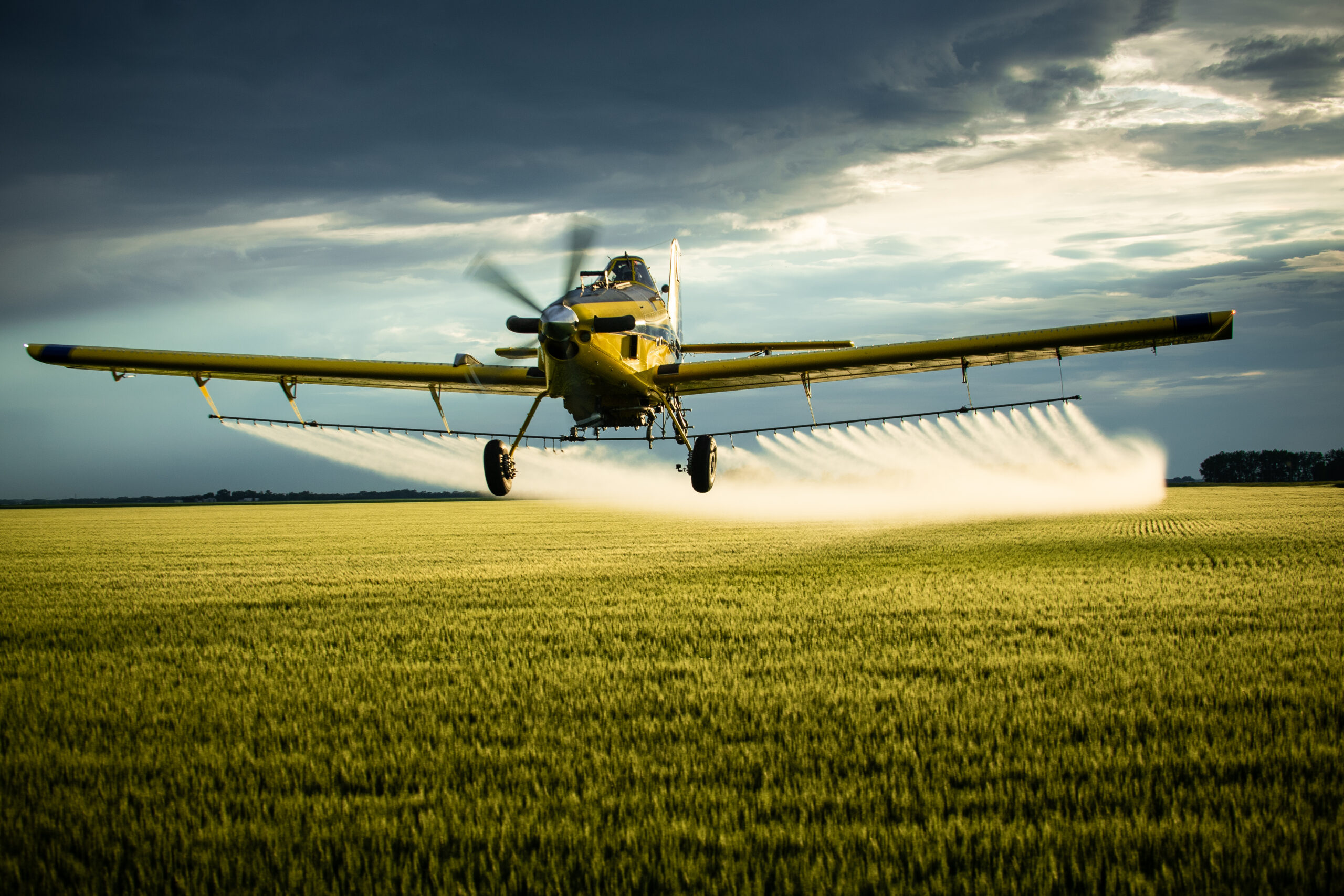
The deep-rooted connection between aviation and agriculture, which began with the first “crop dusters” in the 1920s, has evolved dramatically. The modern turboprop is a sophisticated tool that offers a unique and unparalleled blend of operational flexibility, economic efficiency, and contemporary comfort. While light jets may offer higher cruise speeds between major urban centers, the turboprop’s value proposition is defined by its ability to bypass conventional infrastructure entirely. It is engineered to thrive where the pavement ends, providing direct access to the very heart of agricultural operations. This report will provide a comprehensive analysis of why the turboprop aircraft is not merely a mode of transportation but an indispensable strategic asset, a force multiplier that enables the agility, oversight, and efficiency required to lead a 21st-century agricultural empire.
The Turboprop Advantage: A Synthesis of Power, Efficiency, and Economy
The preference for turboprop aircraft in the agribusiness sector is rooted in the fundamental principles of its engine technology. The turboprop design represents a masterful synthesis of the power and reliability of a gas turbine engine with the aerodynamic efficiency of a propeller, creating a powerplant uniquely suited to the mission profiles common in agriculture. This advantage manifests in two critical areas: superior engineering for efficiency and compelling economics of operation.
Engineering for Efficiency
At its core, a turboprop engine is a gas turbine (jet) engine that uses the majority of its power to spin a shaft connected to a propeller, rather than generating thrust primarily from high-velocity exhaust gases. This configuration is inherently more efficient at the speeds and altitudes where most regional travel occurs. While a pure jet engine excels at high speeds and high altitudes, a propeller is most efficient at accelerating a large mass of air at slower speeds, typically below 400 miles per hour. This creates an operational sweet spot that aligns perfectly with the short-to-medium-range flights—generally under 1,500 miles—that characterize agribusiness travel between farms, processing plants, and regional offices.
This efficiency translates directly into significant fuel savings. Turboprops burn substantially less fuel per hour compared to jets, a benefit that is most pronounced on shorter routes where a jet would spend a disproportionate amount of its flight time climbing and descending, never reaching its most efficient high-altitude cruise phase. Furthermore, turboprop engines boast a high power-to-weight ratio, meaning they produce a great deal of power for their relatively light weight. A prime example is the legendary Pratt & Whitney PT6A engine, which is remarkably lightweight yet produces tremendous horsepower, contributing to the excellent takeoff and climb performance for which turboprops are known. This power, combined with the use of constant-speed, variable-pitch propellers, allows the aircraft to generate maximum thrust at low speeds, a critical advantage during takeoff from short or unimproved fields.
The Economics of Operation
The engineering advantages of the turboprop translate directly into a compelling economic case. The total cost of ownership for a turboprop is consistently lower than that of a comparable light jet, a calculation that includes acquisition price, insurance, operational costs, and maintenance. Charter rates reflect this reality, with turboprop flights often costing 30-40% less per hour than light jet charters.
A significant factor in this economic equation is maintenance. Turboprop engines are mechanically simpler, with fewer moving parts than their jet or piston counterparts, which leads to greater reliability and less complex, less costly maintenance routines. This results in less downtime and longer Time Between Overhaul (TBO) periods, maximizing the aircraft’s availability and value. The Pratt & Whitney PT6 engine family, in particular, has built a global reputation for being one of the most durable and dependable powerplants in aviation history, making it the engine of choice for demanding applications in agriculture, cargo, and special missions.
For an agribusiness, these economic benefits are not merely about saving money; they fundamentally alter how the aircraft can be utilized. The lower hourly operating cost removes the financial barrier to using the aircraft for more frequent, proactive management tasks. An executive can justify a short flight to a remote property to inspect a new irrigation system or assess crop health—missions that would be cost-prohibitive in a jet. This transforms the aircraft from a simple transportation vehicle into a dynamic, high-frequency management tool, enabling a level of operational oversight that directly contributes to improved efficiency, earlier problem resolution, and ultimately, a stronger bottom line.
Where the Pavement Ends: Unmatched Access for the Modern Farm and Ranch
The single most decisive advantage of the turboprop aircraft in the agribusiness context is its unparalleled ability to operate from runways that are inaccessible to virtually any jet: short, unimproved, and unpaved surfaces. This capability is not an incidental feature; it is a core design principle that aligns the aircraft directly with the physical reality of agricultural operations, where the most critical work happens far from the nearest paved runway.
Turboprop aircraft are renowned for their exceptional Short Takeoff and Landing (STOL) performance. They are engineered to safely operate from runways as short as 3,200 feet, and in many cases, significantly less. The Cessna Grand Caravan EX, for example, has a takeoff ground roll of just 1,399 feet. This stands in stark contrast to the typical 5,000-foot minimum runway length required by most light jets. This performance is achieved through a combination of powerful engines, high-lift wing designs, and sophisticated propeller systems that provide reverse thrust for rapid deceleration upon landing.
More importantly, turboprops are built with the structural integrity and robust landing gear necessary to handle the rigors of routine operations on grass, gravel, and dirt airstrips. Aircraft like the Pilatus PC-12, with its heavy-duty trailing-link landing gear, are specifically designed to provide smooth, stable landings on such surfaces, making it “at home on a short, remote grass airstrip”. The Cessna Caravan family is similarly equipped with rugged, oversized tires and landing gear purpose-built for rudimentary runways. This is a recognized and legitimate form of aviation, with the Federal Aviation Administration (FAA) providing guidance for operations on unpaved surfaces, a domain where turboprops excel.
This capability fundamentally redefines the concept of “speed” and “efficiency” for agribusiness logistics. While a jet may have a higher airspeed, its utility is limited by its dependence on established airports. For an agribusiness executive, the critical metric is not “time in the air” but “total mission time” from door to destination. A jet might save 30 minutes on a 500-mile flight, but if its destination airport is followed by a two-hour drive to the actual farm or ranch, that airborne advantage is completely erased. A turboprop, by contrast, can fly directly to a private airstrip on the property, eliminating the time-consuming “last 50 miles” of ground transit. In this real-world scenario, the “slower” turboprop completes the mission in significantly less total time, delivering personnel exactly where they are needed, when they are needed. This compression of the entire logistical chain is the turboprop’s ultimate strategic value, turning what might be a full-day trip into a manageable half-day mission and dramatically increasing the productivity of an organization’s most valuable asset: its leadership’s time.
The Strategic Calculus: Why Turboprops Outperform Light Jets in the Agribusiness Arena
Choosing an aircraft is a significant capital investment, and for an agribusiness, the decision between a turboprop and a light jet is a strategic one. It is not a question of which aircraft is “better” in an absolute sense, but which is the superior tool for the specific, multifaceted demands of the agricultural sector. A data-driven analysis of key operational and economic metrics reveals a clear and compelling case for the turboprop’s dominance in this arena.
The most immediate differentiator is cost. Turboprops offer a significant advantage across the entire financial spectrum, including lower acquisition prices, reduced insurance premiums, and most critically, lower hourly operating costs. As shown in the comparative table below, the hourly cost of operating a leading turboprop like the Beechcraft King Air 360 can be substantially less than that of a very light jet like the Cessna Citation M2, making it far more economical for the frequent, shorter-duration flights common in agribusiness.
Performance envelopes also diverge significantly. Light jets are optimized for high-altitude flight, typically cruising above 40,000 feet where they achieve maximum fuel efficiency. Turboprops, however, are most efficient at lower altitudes, generally below 30,000 feet, which is the ideal envelope for regional missions. Forcing a jet to operate on a short, low-altitude flight is akin to using a race car for city driving—it is highly inefficient and negates the aircraft’s primary design advantages.
The most critical operational factor, however, remains airport access. The ability of turboprops to utilize short and unpaved runways opens up thousands of additional landing sites across the country, from small rural airports to private farm strips, that are simply inaccessible to jets. This grants an agribusiness operator a level of logistical freedom and direct-to-destination capability that a jet cannot provide. Finally, many turboprops offer greater payload flexibility, with larger cabin volumes and the ability to be easily reconfigured for mixed passenger and cargo loads, a versatility that is invaluable in an industry where the mission can change from transporting executives one day to flying in a critical piece of farm equipment the next.
The perceived disadvantages of turboprops—slower cruise speeds and lower operating altitudes—are often either irrelevant or even advantageous in the agribusiness context. The time saved by a jet’s higher speed is frequently lost to ground travel, and the lower cruising altitude is perfectly matched to the shorter stage lengths of regional flights. The turboprop’s characteristics are not a compromise; they are an optimized solution for the unique demands of the agricultural world.
| Metric | Representative Turboprop (Beechcraft King Air 360) | Representative Light Jet (Cessna Citation M2) | Advantage for Agribusiness |
| Typical Hourly Operating Cost | ~$1,593 | ~$2,500 – $3,400 | Turboprop: Lower costs enable more frequent operational flights, turning the aircraft into a dynamic management tool. |
| Takeoff Distance (SL, ISA) | 3,300 ft | 3,210 ft (M2 Gen2) | Comparable: Both offer good performance, but the turboprop’s ruggedness is key. |
| Access to Unpaved Runways | Yes (Designed for it) | No (Requires paved surfaces) | Turboprop: Non-negotiable advantage, providing direct access to farms, ranches, and remote sites. |
| Typical Cruise Speed | 312 ktas | 404 ktas | Light Jet: Faster airspeed, but often negated by longer ground transit time due to limited airport access. |
| Max Useful Load | 5,145 lbs | 3,820 lbs (M2 Gen2) | Turboprop: Greater capacity for passengers, cargo, or a combination, enhancing mission flexibility. |
| Cabin Volume / Flexibility | 303 cu ft / High (Reconfigurable) | 249 cu ft / Lower (Fixed Seating) | Turboprop: More spacious and adaptable cabin for mixed-use missions, including cargo transport. |
Table 1: Comparative Analysis: Turboprop vs. Light Jet for Agribusiness Operations. Data compiled from multiple sources to provide a representative comparison.
Profiles in Performance: The Go-To Aircraft for Agricultural Leaders
The theoretical advantages of turboprop aircraft are best illustrated by the specific models that have become fixtures on the ramps of farms, ranches, and agribusiness headquarters worldwide. These aircraft are not just popular; they are proven performers, each offering a distinct blend of capabilities tailored to different facets of the agricultural industry.
The Executive Benchmark: Beechcraft King Air 360
For decades, the Beechcraft King Air family has been the gold standard in business turboprop aviation, and with nearly 7,600 aircraft delivered, it is the best-selling business turboprop family in the world. The latest iteration, the King Air 360, continues this legacy, offering a refined combination of performance, reliability, and cabin comfort. It can carry up to 11 occupants at speeds of 312 ktas over a range of 1,806 nm, providing true inter-regional capability. Its impressive useful load of 5,145 lbs and ability to operate from runways as short as 3,300 feet give it the flexibility to serve smaller community airports close to agricultural centers. The ultimate endorsement of its suitability comes from its direct association with the industry it serves. The creation of a King Ranch Special Edition King Air 360 explicitly links the iconic aircraft with one of America’s largest and most legendary agricultural operators. Furthermore, the choice of a King Air 360 as the first-ever aircraft purchase by Stamoules Produce Company, a 17,000-acre California farm, underscores its perfect fit for large-scale agricultural operations.
The Versatile Maverick: Pilatus PC-12
Often called the “Swiss Army Knife of private aviation,” the Pilatus PC-12 has carved out a unique niche by offering a combination of capabilities found in no other aircraft. Its most distinctive features are a massive, pallet-sized rear cargo door and a spacious, flat-floor cabin that can be quickly reconfigured from an executive layout to a cargo hauler or a combination of both. This unmatched versatility makes it ideal for agribusinesses that need to transport everything from board members to bulky equipment. The PC-12 is single-pilot certified, seats up to nine passengers, and boasts a range of over 1,700 nm. Its legendary short and rough-field performance, enabled by a robust trailing-link landing gear, allows it to access thousands of remote airstrips that are off-limits to other business aircraft. This capability, combined with the exceptional efficiency of its single Pratt & Whitney PT6 engine—resulting in operating costs around $800 per hour—makes the PC-12 a powerful and economical tool for operators who prioritize flexibility and access above all else.
The Ultimate Utility Vehicle: Cessna Grand Caravan EX
Where the mission demands maximum payload and ultimate ruggedness, the Cessna Grand Caravan EX stands in a class of its own. Engineered from the ground up as a utility aircraft, the Grand Caravan EX is built for challenging missions, high payloads, and short, rough runways. It boasts an enormous useful load of over 3,532 lbs and can be configured to carry up to 14 occupants, making it a true workhorse. Its high-wing design and fixed, rugged landing gear provide exceptional stability and durability for operations on grass, dirt, or gravel strips, with a takeoff ground roll of only 1,399 feet. The Caravan’s adaptability is further enhanced by options such as an underbelly cargo pod for additional storage or amphibious floats that allow it to operate from water, giving it access to the most remote locations imaginable. For agricultural operations that require moving large teams of workers, heavy supplies, or both, the Grand Caravan EX offers unparalleled capability and single-engine economy.
| Model | Primary Role | Max Passengers | Max Useful Load (lbs) | Max Range (nm) | Takeoff Distance (ft) | Unpaved Runway Ops |
| Beechcraft King Air 360 | Executive Transport | 11 | 5,145 | 1,806 | 3,300 | Yes |
| Pilatus PC-12 NGX | Versatile/Mixed-Use | 10 | 2,236 | 1,765 | 2,485 | Excellent |
| Cessna Grand Caravan EX | Utility/Cargo | 14 | 3,532 | 912 | 1,399 (Ground Roll) | Excellent |
Table 2: Leading Turboprop Models for Agribusiness: A Specification Overview. Data compiled from manufacturer and industry sources.
The 21st Century Cockpit and Cabin: Debunking Myths of Turboprop Travel
A persistent and outdated perception of turboprop aircraft is that they are technologically spartan and offer a less comfortable passenger experience compared to jets. This notion is fundamentally at odds with the reality of the modern turboprop. Today’s leading models feature cockpits and cabins equipped with the same advanced technology and luxury appointments found in their light jet counterparts, effectively erasing the distinction in safety, capability, and comfort.
The Glass Cockpit Revolution
The flight decks of modern turboprops have undergone a complete transformation, moving from traditional analog “steam gauges” to sophisticated, integrated glass cockpits. Systems like the Collins Aerospace Pro Line Fusion in the King Air 360 and Garmin’s G1000 NXi and G3000 suites in aircraft from Cessna, Daher, and Epic have become the standard. These advanced avionics suites dramatically enhance situational awareness and safety while reducing pilot workload. Features that were once the exclusive domain of airliners and large business jets are now common in turboprops, including:
- Synthetic Vision Technology: Displays a 3D virtual reality view of terrain, obstacles, and runways on the primary flight displays, providing clear visual orientation even in low-visibility conditions.
- Integrated Systems: Seamlessly integrate weather radar, traffic collision avoidance systems (TCAS), terrain awareness and warning systems (TAWS), and graphical flight planning into a single, intuitive interface.
- Advanced Automation: Perhaps the most significant advancement is the introduction of jet-level automation. The King Air 360, for example, comes standard with the IS&S ThrustSense® Autothrottle. This system automatically manages engine power from takeoff to landing, optimizing performance and protecting the engines from exceeding temperature or torque limits. This not only increases efficiency and safety but also significantly reduces pilot workload, making complex single-pilot operations far more manageable.
The Executive Cabin Experience
The evolution of the turboprop cabin has been equally revolutionary. Manufacturers recognize that the aircraft must serve as a comfortable and productive environment for executives. As a result, modern turboprop interiors rival those of light jets in every respect. Cabins are appointed with premium leathers, fine wood veneers, and contemporary design elements. Advanced soundproofing techniques have dramatically reduced interior noise levels, creating a quiet atmosphere conducive to work or relaxation.
Specific technological enhancements have further elevated the passenger experience. The King Air 360’s digital pressurization system, for instance, automatically schedules cabin pressure during climb and descent, maintaining a lower, more comfortable cabin altitude. This reduces the physiological effects of flying and ensures passengers arrive at their destination feeling more refreshed and less fatigued. Standard amenities now include pull-out work tables, universal power outlets, USB charging ports, and high-speed onboard Wi-Fi, allowing the cabin to function as a true office in the sky. The inclusion of private, fully-enclosed lavatories is now a common feature, adding a level of comfort and convenience expected in executive travel.
This convergence of rugged capability with jet-like comfort and technology has fundamentally altered the turboprop’s value proposition. An agribusiness leader no longer needs to choose between an aircraft that can access remote fields and one that provides a suitable environment for conducting business. The modern turboprop delivers both in a single, highly efficient platform. It is an aircraft that can land on a gravel strip in the morning to oversee harvesting operations and then fly to a major city for a board meeting in the afternoon, all without compromising safety, comfort, or technological sophistication. This dual-purpose excellence makes it a uniquely powerful and cost-effective asset for the modern agricultural enterprise.
Flying Green: Sustainability and the Future of Turboprops in Agribusiness
In an era of increasing environmental awareness, the sustainability of operations has become a critical consideration for all industries, and agribusiness is no exception. As stewards of the land, agricultural leaders are uniquely positioned to appreciate the importance of environmental responsibility. The aviation industry is undergoing its own green revolution, and the turboprop aircraft, with its inherent efficiency and forward-looking technology, is well-positioned to be a leader in this transition.
The cornerstone of aviation’s decarbonization strategy is Sustainable Aviation Fuel (SAF). SAF is a “drop-in” biofuel produced from renewable feedstocks such as used cooking oil, agricultural residues, and municipal waste. It is chemically identical to conventional jet fuel and can be used in existing aircraft and infrastructure without modification. Crucially, depending on the feedstock and production method, SAF can reduce lifecycle greenhouse gas emissions by up to 80% compared to its fossil-based counterpart.
Turboprop manufacturers and engine makers are at the forefront of the push for SAF adoption. Leading companies like ATR and Pratt & Whitney Canada are actively working toward certifying their aircraft and engines for operation on 100% SAF by 2030, a significant step toward a net-zero carbon future. Current-generation turboprops are already certified to operate on blends of up to 50% SAF, allowing operators to immediately and significantly reduce their carbon footprint.
Beyond SAF, the turboprop’s fundamental design provides an inherent environmental advantage. As established, turboprops are significantly more fuel-efficient on the short-to-medium-haul routes that dominate regional travel, burning less fuel and therefore producing fewer emissions per flight than a comparable jet on the same mission. This foundational efficiency means that even when operating on conventional fuel, a turboprop represents a more environmentally conscious choice for the typical agribusiness flight profile.
For an agribusiness, whose brand and long-term viability are intrinsically linked to the health of the environment, this alignment is a powerful strategic asset. Operating a fuel-efficient turboprop and embracing the use of SAF allows a company to demonstrate a tangible commitment to sustainability. It turns the corporate aviation department from a potential point of criticism regarding emissions into a proactive symbol of the company’s environmental stewardship. This creates a powerful brand synergy, allowing an enterprise that profits from the land to utilize an aviation tool that reflects a deep commitment to preserving it for future generations.
An Indispensable Tool for Growth and Efficiency
The dominance of the turboprop aircraft in the executive agribusiness sector is not a matter of chance or compromise; it is the logical outcome of a perfect alignment between the aircraft’s unique capabilities and the industry’s distinct operational demands. Through a synthesis of rugged versatility, compelling economics, and modern sophistication, the turboprop has proven itself to be the single most effective aviation tool for managing and growing a large-scale agricultural enterprise.
The analysis has demonstrated that the turboprop’s core strengths are a direct solution to the primary challenges of agribusiness logistics. Its unparalleled ability to operate from short, unpaved runways provides direct access to the heart of operations, fundamentally redefining efficiency by optimizing total mission time, not just airspeed. This capability transforms the aircraft from a mere transport vehicle into a strategic force multiplier, enabling faster response to operational issues, more effective oversight of dispersed assets, and ultimately, greater productivity.
Economically, the turboprop presents a superior value proposition. Lower acquisition, maintenance, and hourly operating costs make it a more sustainable investment, encouraging its use as a frequent and proactive management tool rather than a rarely used executive perk. This financial accessibility, combined with its legendary reliability, ensures maximum uptime and return on investment.
Furthermore, the modern turboprop has decisively shed any outdated notions of being a spartan or technologically inferior option. With advanced glass cockpits that rival those of light jets in safety and automation, and luxurious, well-appointed cabins that serve as comfortable and productive mobile offices, today’s turboprops offer a no-compromise solution. They seamlessly blend the ruggedness required for field work with the comfort and technology expected in the corporate world.
Finally, as the agricultural industry continues to embrace sustainability, the turboprop’s inherent fuel efficiency and compatibility with Sustainable Aviation Fuel position it as a responsible, forward-looking choice. For the agribusiness leader, the turboprop is therefore more than an aircraft. It is a competitive advantage—a strategic asset that empowers agile management, drives operational efficiency, and supports sustainable growth in a complex and demanding global market.